Basically, Egyptology is based on the documentation of Herodotus (the father of history) to impose all their theories of the Great Pyramid. Herodotus lived in the V century BC, and made a trip to Egypt where they told him at that time the people believed. Besides him, made some calculations of the construction time from the data that had given him. Here are their results:
He was told that the pyramids were built in 20 years (this because it was assumed that the pyramids should be started and completed during the life of Pharaoh), and 100,000 men. The fact that Herodotus was missing was the number of blocks of stone with which it is built the Pyramid. In total some 2,500,000 of gigantic blocks. According to these data, assuming they worked an average of 12 hours per person for 20 years, we get the remarkable result that every 2 minutes someone was going to the quarry, stung the block, polished, transported him to the esplanade of the pyramid and posing in the right place, I repeat, all this in 2 minutes. Remember that were in the age of copper.
Moreover, technical problems are, how they climbed the blocks, how they may be perfectly fitted, that not a piece of paper to fit between the joints of the stones without using any evidence to link them but the pressure between them?.
Egyptology says that to raise the stone blocks around the pyramid made a pile of earth and stones dragged there ..... well then those two minutes we would have to take out 1 at least.
found in this pyramid, and elsewhere in Egypt, circular holes in the stone blocks of 12 cm in diameter and various depths (20-40 cm). Egyptology says that these holes were made manually with a rotating apparatus. Very well, like I did say that .... because the finger bits currently head or diamond (the hardest known) could make those holes with the pressure with which they are made those holes (the pressure is measured by the width of the turn of the thread which is engraved in stone).
To this we must add the great wisdom in engineering and architecture should have the Egyptians (at the age of copper) to lift the pyramid. For instance, how blocks of stone made to withstand the weight load that is above the King's Chamber.
special mention are the measurements of the Great Pyramid. But for better information they pick a book because there are plenty of chances.
Another interesting curiosity is that two Egyptian cubits (a measure of the time) corresponds exactly to the astronomical meters (1.07 meters). We needed to get to the end of the century to know that the meter was measured wrong, and they already knew by then .... in the Copper Age, remember. Coincidence
Let other important information about the date of construction:
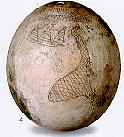
has discovered a mummy with all his goods which has been dated to the years 8000 and 9000 BC However, among the objects that were buried , is an ostrich egg, with some paintings in the shell. One of the paintings is very significant, is a river, and next three pyramids. "Three Pyramids in 8000 BC? Envuentra
This egg is in the Nubian Museum in Aswan. Egyptology ignored.